SUITA CITY SHRINE GUIDE
日本語EN한국어繁體ID

SUITA SHRINE GUIDE

Shrines of Suita

From shrines recorded a thousand years ago in the Engishiki to a 1926 shrine born with a garden suburb — a guide to 19 Shinto sites in Suita, told through four stories and a festival calendar.

Suita has 14 shrines listed by the Osaka Jinjacho; this guide covers 19 sites including sub-shrines. The highest ancient rank belongs to Tarumi Shrine, a Myojin Taisha of the Engishiki (927), followed by the two Engishiki-listed Izanagi shrines (Yamada and Saidera). By scale and festivals, Izanagi Shrine in Yamada, Takahama, Kishibe and Izudono-gu are the leading shrines, with folk-heritage festivals such as the Donji rite (Oct 17) and the Suita Danjiri Festival (late July).

Shrines are ordered by historical rank, scale and editorial priority — not by measured grounds area (no uniform survey exists).

01 — FOUR STORIES

Four stories behind Suita's shrines

1

Shrines in a 1,000-year-old register

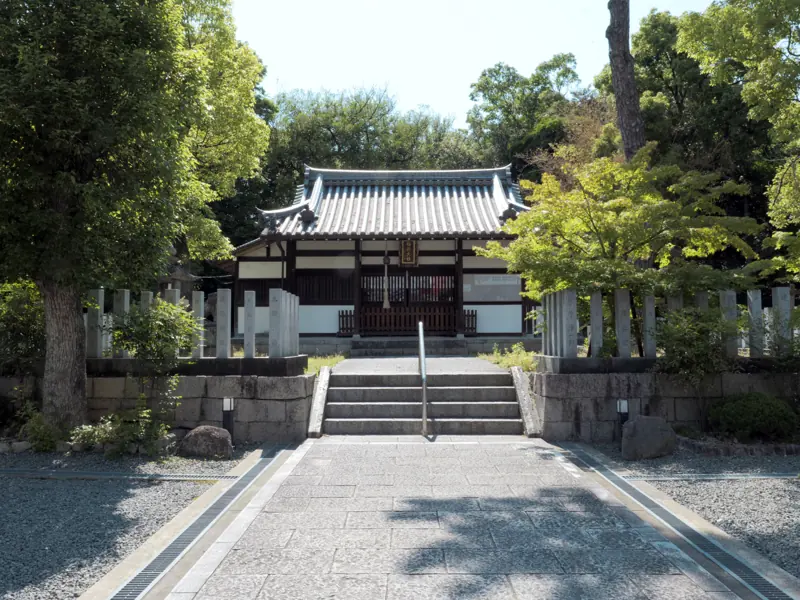
The Engishiki, a legal compendium completed in 927, lists the shrines honored by the ancient state. From Suita it lists the two Izanagi shrines (Yamada and Saidera), and Tarumi Shrine held the top rank of Myojin Taisha. You can still walk to shrines recorded a millennium ago.

Read the feature page →
2

Where 'Suita' began

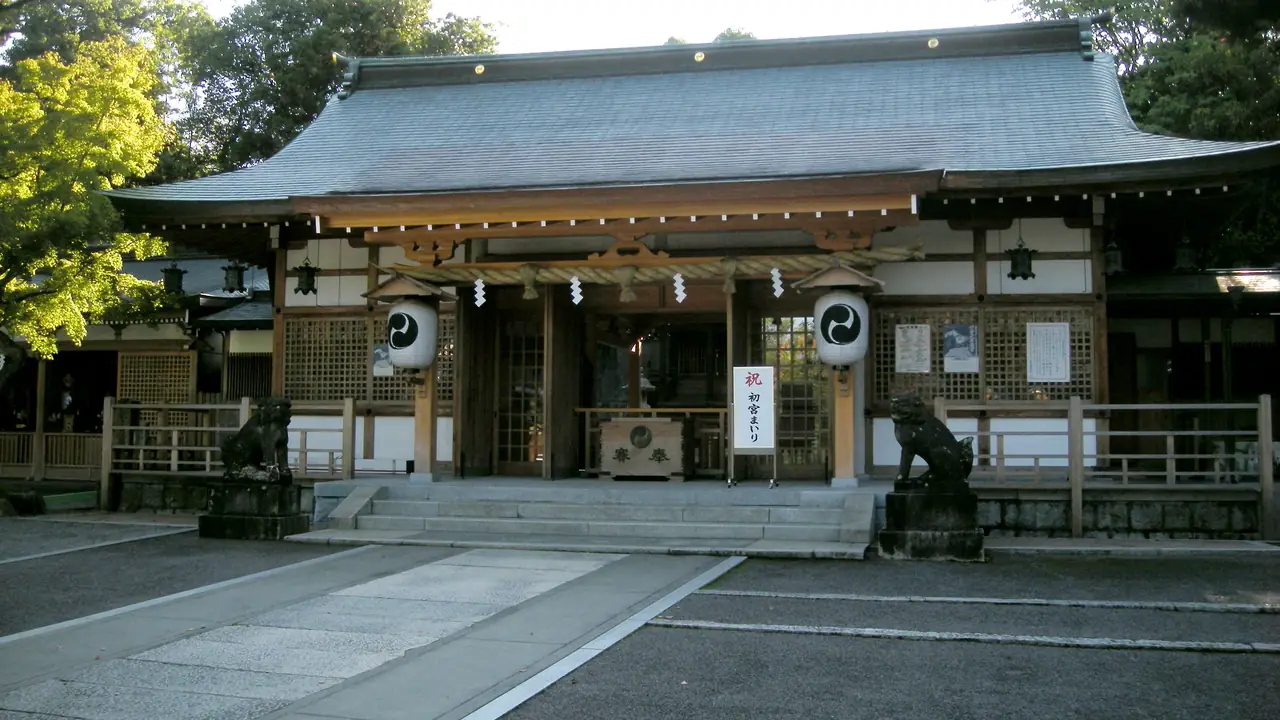
Takahama Shrine appears as the 'Great Shrine of Suita' in a document of 735, and tradition ties it to the Suita-no-muraji clan who crossed the Yodo River to found the village. The story of the city's name starts here.

3

Fire and rebirth

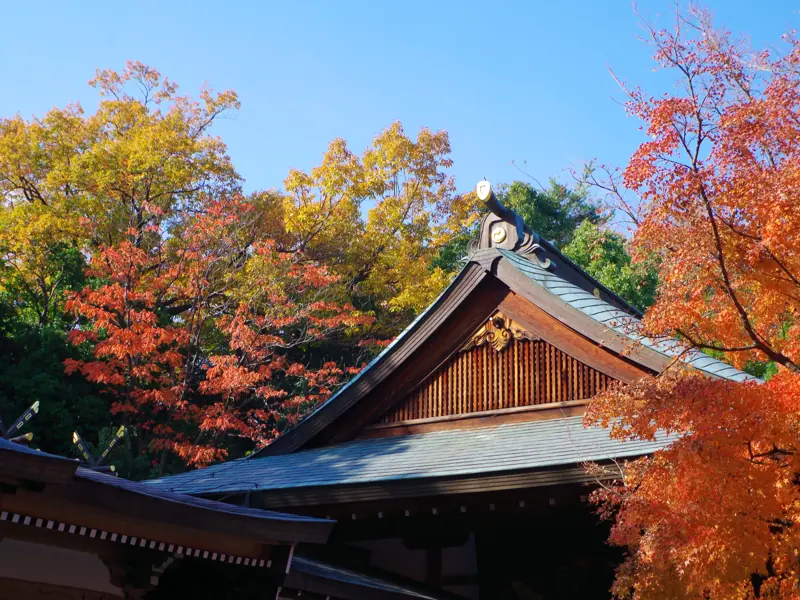
Kishibe Shrine's 1610 sanctuary was a National Important Cultural Property until it was lost to fire in 2008. Rebuilt in 2011 with its Momoyama-style colors restored, it still hosts the ancient 'Donji' rite each autumn, on the hill where Heian-kyo's roof tiles were fired.

4

Water — and beer

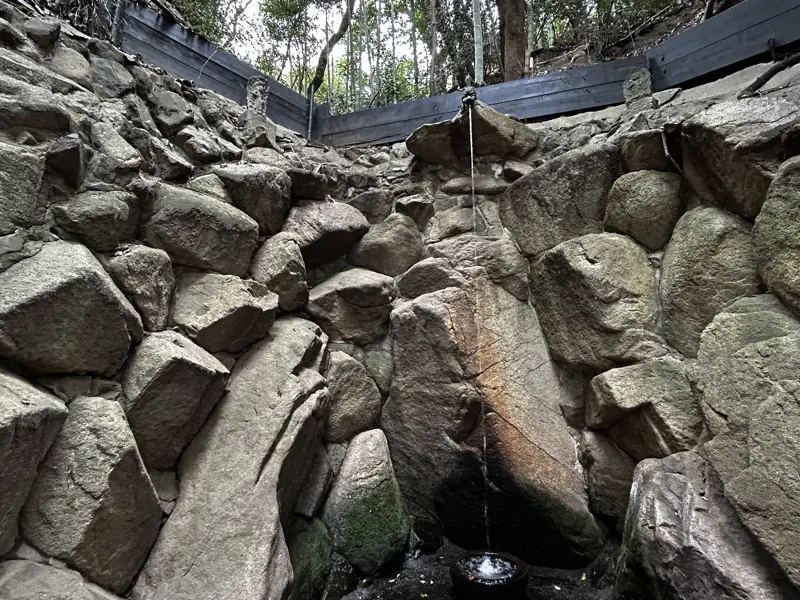
Tarumi Shrine takes its name from water falling over a cliff; Izudono-gu from a spring said to have gushed after rain prayers. In 1889 Izudono-gu's water was judged 'ideal for brewing' in Munich — the reason Asahi's first brewery was built in Suita.

02 — MAJOR SHRINES

Major shrines

Izanagi Shrine (Yamada)
The shrine in autumn (photo 2013)
01

Izanagi Shrine (Yamada)

伊射奈岐神社(山田東)・いざなぎじんじゃ

Engishiki shrinePref. cultural propertyFolk-heritage festival

Listed in the Engishiki register of 927; the main deity is Izanami. The sanctuary, thought to date from the mid-Edo period, is an Osaka Prefectural Cultural Property, and the taiko-mikoshi autumn festival is its best-known event.

Shrine tradition traces its origin to the reign of Emperor Yuryaku (legend). The stone torii was rebuilt in 2019 after earthquake damage.

Address
山田東2-3-1
Main events
Autumn festival (taiko mikoshi): Oct., day before Sports Day
Tarumi Shrine
Tarumi waterfall (photo 2025)
02

Tarumi Shrine

垂水神社・たるみじんじゃ

Myojin Taisha

Ranked as a Myojin Taisha in the Engishiki — the highest ancient rank of any shrine in Suita. Its name comes from 'tarumi', water falling from the Senri Hills, and court records tell of rain-making prayers here.

A 9th-century genealogy relates that water was piped from here to the Naniwa palace during a drought (a tradition in later sources). The 'tarumi' in a famous Man'yoshu poem by Prince Shiki is often linked to this place. The present buildings date from 1974.

Address
垂水町1-24-6
Main events
Annual festival: Oct 21; Tarumi Ebisu: Jan 10
Kishibe Shrine
The approach (photo 2006; the halls were rebuilt in 2011)
03

Kishibe Shrine

吉志部神社・きしべじんじゃ

City cultural propertyFolk-heritage festival

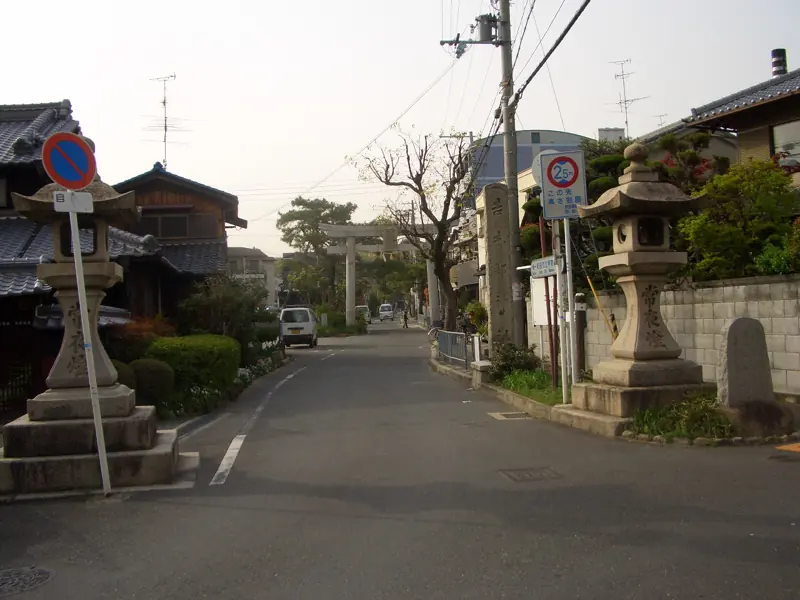
Stands on the hill where roof tiles for the Heian capital were fired (the national historic site of the Kishibe kilns). Its 1610 sanctuary — once a National Important Cultural Property — was lost to arson in 2008 and rebuilt in 2011 in its original form and colors.

The 'Donji' autumn rite, with its child procession, is a city-designated intangible folk cultural property. The 300-meter straight approach from the old Kameoka Road is another highlight. 20 min on foot from JR Kishibe Station (official guide).

Address
岸部北4-18-1(紫金山公園内)
Main events
'Donji' autumn festival: Oct 17; spring festival: Apr 16
Izudono-gu Shrine
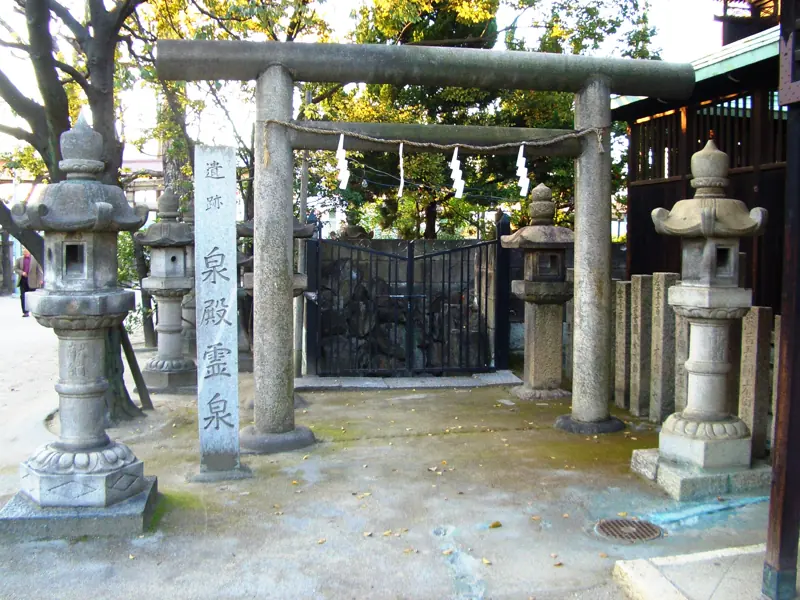
Remains of the sacred spring (photo 2005). The spring stopped flowing in the late 1950s
04

Izudono-gu Shrine

泉殿宮・いづどのぐう

Folk-heritage festival

Two minutes on foot from Hankyu Suita Station. Shrine tradition says a spring gushed here in 869 when prayers for rain were offered. In 1889 its water was judged 'ideal for brewing beer' in Munich — and Osaka Beer (today's Asahi Breweries) built its brewery nearby.

The spring itself stopped flowing in the late 1950s; its remains can still be seen. The shrine's lion dance, with a lion standing on a performer's shoulders, is a registered local folk cultural property.

Address
西の庄町10-1
Main events
Toka Ebisu: Jan 9–11; annual festival: May 3
Takahama Shrine
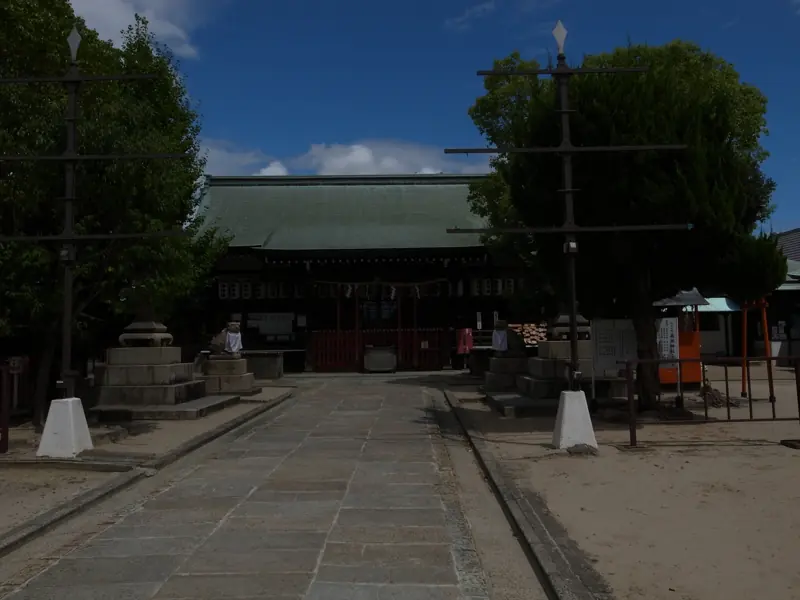
The main hall (photo 2023)
05

Takahama Shrine

高浜神社・たかはまじんじゃ

City cultural propertyFolk-heritage festival

The guardian shrine of old Suita town, affectionately called 'Omiya-san'. A document of 735 already mentions it as the 'Great Shrine of Suita', and tradition ties it to the Suita-no-muraji clan who founded the village — the story behind the city's name. The present main hall was rebuilt in 1693.

Three of the seven city-designated danjiri festival floats are kept here; six floats parade near JR Suita Station in the Suita Danjiri Festival each late July. The 'lucky rabbits' for matchmaking are also popular.

Address
高浜町5-34
Main events
Suita Danjiri Festival: late July; autumn rite (yudate): Oct 5
Esaka Shrine
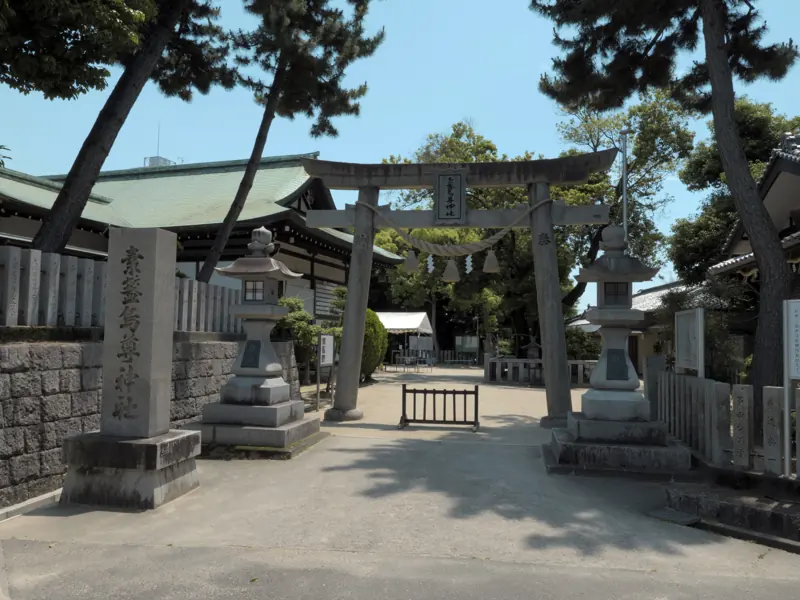
The shrine halls (photo 2024)
06

Esaka Shrine

素盞嗚尊神社(江坂神社)・すさのおのみことじんじゃ

City cultural property

The guardian shrine of the former Esaka village, keeping a grove of trees amid the Esaka business district. Tradition says a deity was invited from Kyoto's Yasaka Shrine in 1184. The main sanctuary, thought to be late-17th-century, is a city-designated cultural property.

Its taiko mikoshi and the accompanying rite were registered as local cultural properties in 2009. The contrast of office towers and the shrine grove is striking.

Address
江坂町3-68-11
Main events
Taiko mikoshi rite (registered local cultural property)
07

Katayama Shrine

素盞烏尊神社(片山神社)・すさのおのみことじんじゃ

The guardian shrine of Katayama, just north of JR Suita Station near the Asahi brewery. It is thought to have begun when Heian-period potters here enshrined Susanoo as their ancestral deity; a record of 1692 lists it as the village's Gozu Tenno shrine.

Old records were lost to fires in the 16th century and in 1914; the present halls date from 1984. The small Atago Shrine of Deguchi stands within its grounds.

Address
出口町3-3
Main events
Autumn festival: Oct 19 (eve) & 20
Kurodo Inari Shrine
The main sanctuary (photo 2024)
08

Kurodo Inari Shrine

稲荷神社(黒田稲荷)・くろどいなりじんじゃ

City cultural property

About 700 m west of Esaka Station. A small Inari shrine whose main sanctuary, dated to the early Edo period, became a city-designated cultural property in 2011. Comparing it with Esaka Shrine's sanctuary shows how early-modern shrine architecture varies.

The heritage database records the sanctuary's width as just 213.4 cm — small shrines let you study the carpentry up close.

Address
豊津町38-1

03 — MORE SHRINES

More shrines & small sanctuaries

04 — FESTIVALS

Festival calendar

Izanagi Shrine (Yamada)Autumn festival (taiko mikoshi): Oct., day before Sports Day
Tarumi ShrineAnnual festival: Oct 21; Tarumi Ebisu: Jan 10
Kishibe Shrine'Donji' autumn festival: Oct 17; spring festival: Apr 16
Izudono-gu ShrineToka Ebisu: Jan 9–11; annual festival: May 3
Takahama ShrineSuita Danjiri Festival: late July; autumn rite (yudate): Oct 5
Esaka ShrineTaiko mikoshi rite (registered local cultural property)
Katayama ShrineAutumn festival: Oct 19 (eve) & 20
Kasuga ShrineAutumn festival: Oct 12 (2026, official)
Senriyama ShrineAutumn festival: Oct 18 (2026); Inari rite in Feb

05 — HOW TO VISIT

How to pray at a shrine

  1. 1

    Bow at the torii

    The torii marks the sacred gate. Give a small bow before passing, and avoid walking down the center of the path.

  2. 2

    Purify at the basin

    At the water basin: left hand → right hand → mouth (with water in your left hand) → the handle.

  3. 3

    Two bows, two claps, one bow

    Offer a coin, ring the bell if there is one, bow deeply twice, clap twice, make your wish, then bow once.

  4. 4

    Photos & quiet

    Photography is generally fine in the grounds, but avoid shooting inside halls or during rites. Many shrines sit in quiet neighborhoods — visit softly.

06 — FAQ

Questions & answers

How many shrines are there in Suita?

The Osaka Jinjacho lists 14. This guide covers 19 sites including sub-shrines, an otabisho and small sanctuaries still under research — it does not claim to cover every wayside shrine.

Which shrine has the highest rank?

By ancient rank, Tarumi Shrine: the Engishiki of 927 lists it as a Myojin Taisha, the top class. The two Izanagi shrines (Yamada and Saidera) are also listed in the Engishiki.

Which shrine is the biggest?

No uniform survey of shrine grounds exists, so we don't rank by area. By scale and festival life, Izanagi Shrine (Yamada), Takahama, Kishibe and Izudono-gu are Suita's leading shrines.

When are the festivals?

The Suita Danjiri Festival runs in late July near JR Suita Station; Kishibe Shrine's Donji rite is on October 17; Izanagi Shrine's taiko-mikoshi festival falls the day before Sports Day in October; Tarumi's annual festival is October 21. Dates can change — check each shrine's notices.

Can I get a goshuin (shrine stamp)?

Yes at Izanagi (Yamada), Kishibe, Takahama and Izudono-gu, among others. Smaller shrines are often unstaffed, so phoning ahead is safest.

Is there an entrance fee?

No — all shrine grounds here are free to enter. Offerings, amulets and stamps are optional.

Sources & photos

History is checked against official shrine records, Suita City, the Osaka Jinjacho and national heritage databases; legends are attributed ('shrine tradition says'). Photos are free-licensed images from Wikimedia Commons with the year taken shown — older photos may differ from today's appearance.