🗺 Open the 3D map of Suita Gamba Osaka fixtures and tickets → History of Suita →
Gamba Osaka history in photos — A 27-second journey through Gamba Osaka's story, year by year: the Matsushita Electric days, the J.League kick-off, the 2008 Asian title, the 2014 treble, Panasonic Stadium Suita and the 2026 ACL Two win.
In this video
- 0:00 1980 Matsushita Electric Soccer Club
- 0:03 1993 J.League kick-off (Original 10)
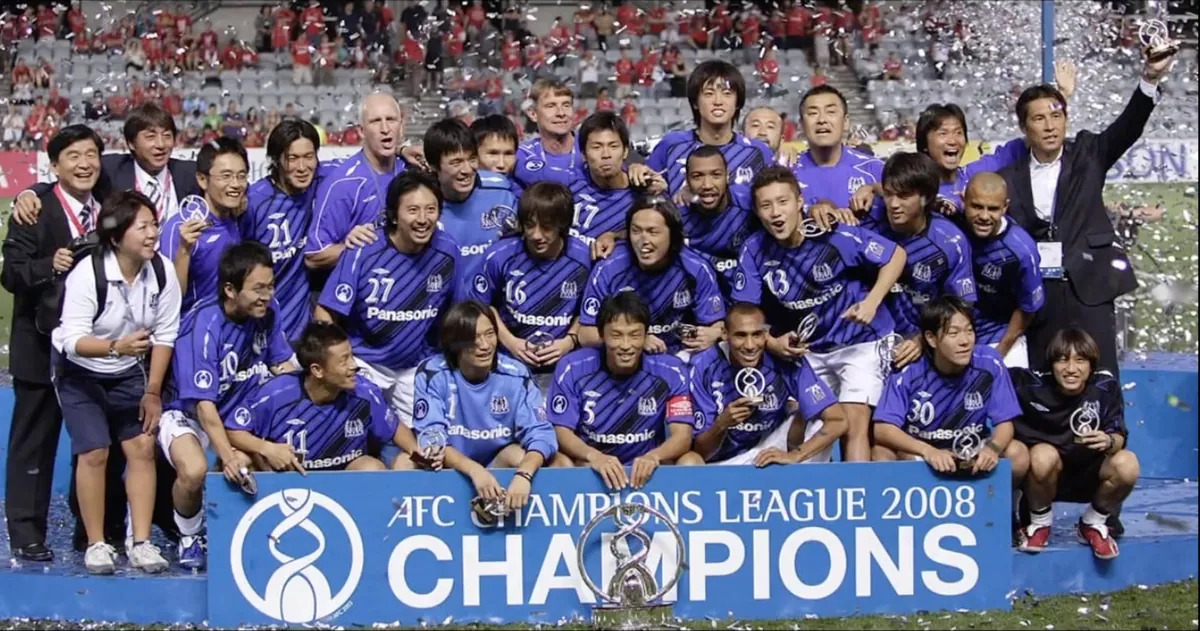
- 0:06 2008 AFC Champions League winners
- 0:09 2014 Nabisco Cup winners
- 0:12 2014 J1 champions and the treble
- 0:15 2015 Emperor's Cup winners
- 0:18 2016 move to Panasonic Stadium Suita
- 0:21 2026 AFC Champions League Two winners
Gamba Osaka at a glance
"Gamba" is Italian for "leg". The club chose the name to stress the leg, the starting point of football, and a simple, strong style of play. It also sounds like the Japanese word ganbaru, "to give your best".
Timeline: from a company team to champions of Asia
- 1980 Founded as the Matsushita Electric soccer club, starting in the Nara amateur league
- 1985 Promoted to the top flight of the Japan Soccer League (JSL)
- 1990 First Emperor's Cup, beating Nissan in the final
- 1991 Professional club company set up; becomes a J.League member
- 1993 The J.League kicks off. Gamba is one of the "Original 10", playing at Expo '70 Commemorative Stadium
- 1996 Renamed "Gamba Osaka"
- 2005 First J1 League title
- 2007 First J.League Cup (Nabisco Cup)
- 2008 AFC Champions League winners; third at the Club World Cup
- 2012 Finish 17th in J1 and are relegated to J2
- 2013 Win J2 and return after one season
- 2014 Domestic treble: J1, J.League Cup and Emperor's Cup
- 2015 Emperor's Cup again; the new stadium is completed and donated to Suita City
- 2016 First season at the new stadium
- 2018 The stadium is named Panasonic Stadium Suita
- 2024 4th in J1 and Emperor's Cup runners-up
- 2026 AFC Champions League Two winners
1980–1992: a company soccer team
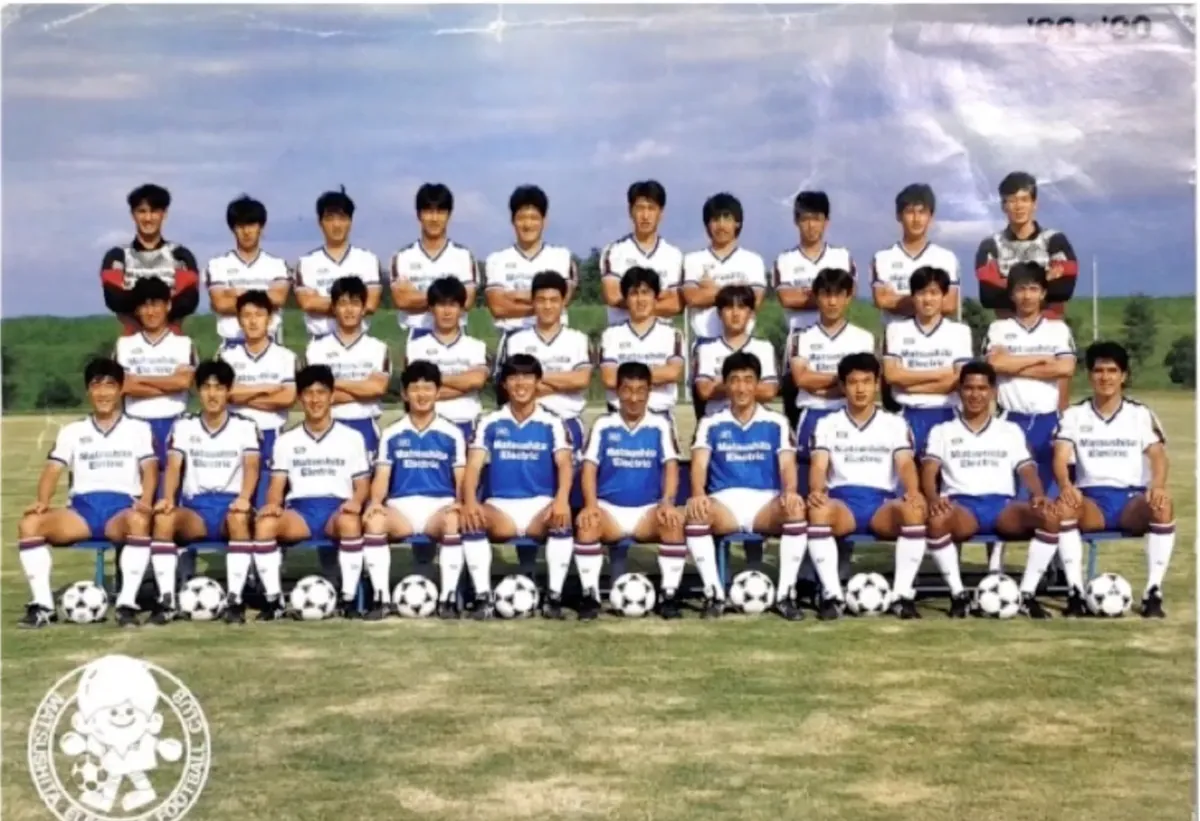
It all began as the works team of Matsushita Electric, the electronics maker now called Panasonic. The team started in 1980 in the second division of the Nara amateur league. In 1983 it won the Kansai league and moved up to the second division of the Japan Soccer League (JSL), then Japan's national league.
In 1985 it reached the JSL top flight. It went down again a year later but bounced straight back in 1987. In 1990 it won its first national title, beating Nissan in the Emperor's Cup final.
In 1991 the professional club company was founded, and Gamba was confirmed as a member of the new professional league, the J.League.
1993: one of the J.League's "Original 10"
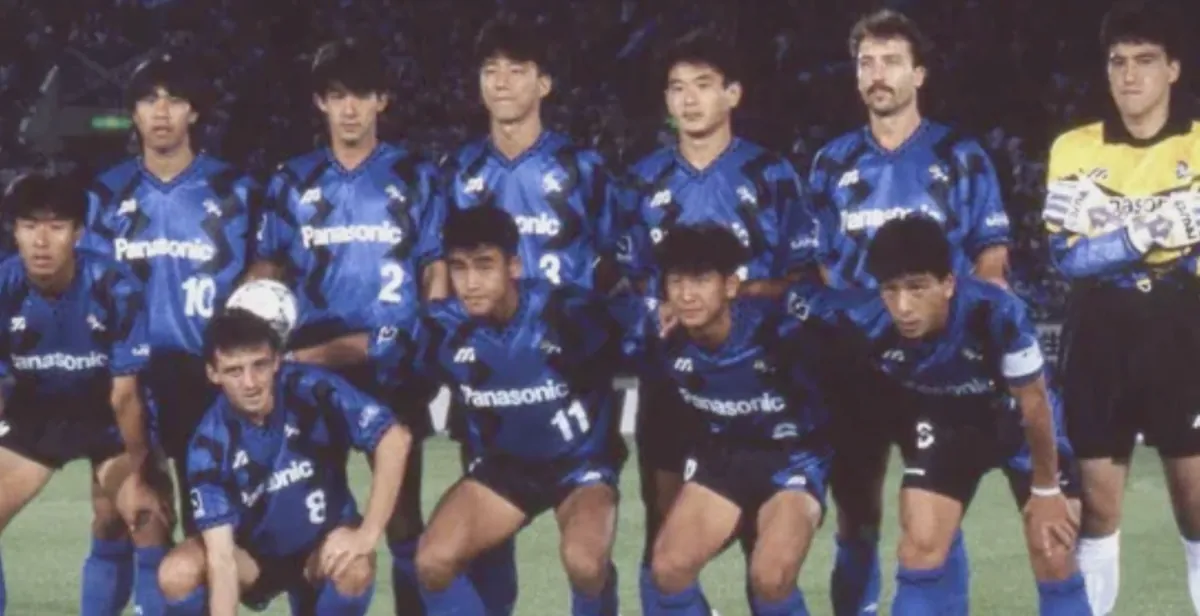
For the J.League the club became "Panasonic Gamba Osaka" in 1992, and "Gamba Osaka" in 1996. Home games were played at Expo '70 Commemorative Stadium (21,000 seats), an athletics stadium in Expo '70 Commemorative Park.
In the early years the former Soviet international Sergei Aleinikov (1993–1996) ran the midfield. In 1997 Cameroon striker Patrick Mboma was the league's top scorer with 25 goals. Academy product Junichi Inamoto made his J.League debut at 17 and later joined Arsenal in England. Tsuneyasu Miyamoto, a future Japan captain, also came through the academy in this era.
2005–2009: the Nishino golden era and the Asian title
Akira Nishino's Gamba was famous for high-scoring, attacking football. In 2005 Brazilian striker Araújo scored 33 goals, won the Golden Boot and MVP, and fired the club to its first J1 title.
The J.League Cup (then the Nabisco Cup) and the Super Cup followed in 2007. Then in 2008 Gamba beat Adelaide United of Australia 3-0 at home and 2-0 away in the AFC Champions League final to become champions of Asia. Yasuhito Endo was named tournament MVP.
| 2008 FIFA Club World Cup | Result |
|---|---|
| Quarter-final: Adelaide United | Won 1-0 |
| Semi-final: Manchester United | Lost 3-5 (goals: Yamazaki, Endo, Hashimoto) |
| Third-place match: Pachuca | Won 1-0, third in the world |
Gamba also won the Emperor's Cup two seasons in a row, in 2008 and 2009.
2012–2015: from relegation to the treble
2012 was a shock: the league's best attack with 67 goals, but 65 conceded and relegation to J2. Kenta Hasegawa arrived as coach in 2013, fixed the defence and won J2 with 25 wins, 12 draws and 5 defeats to return at the first attempt.
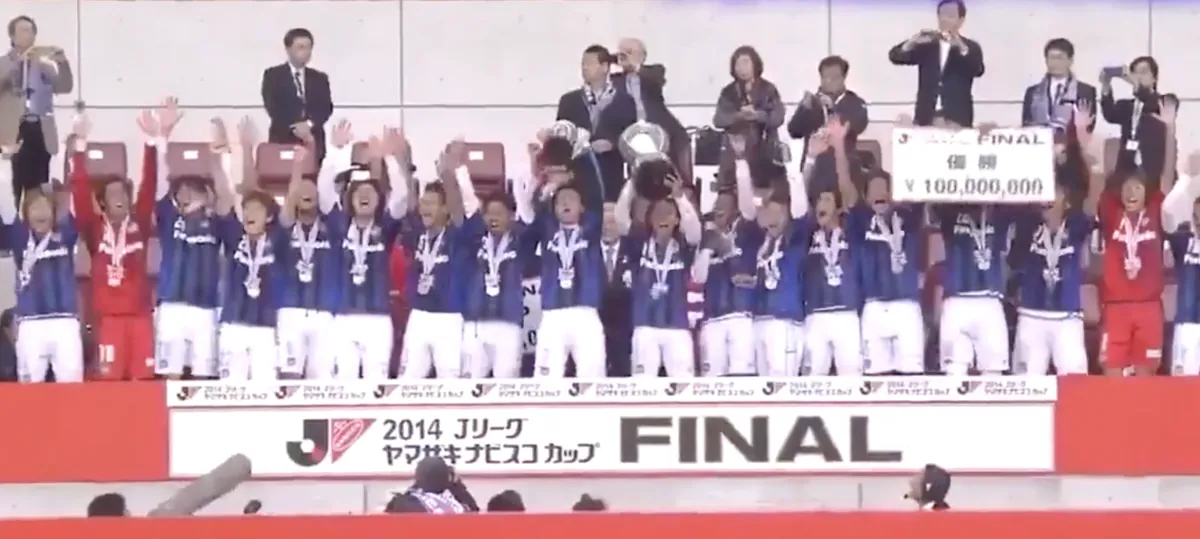
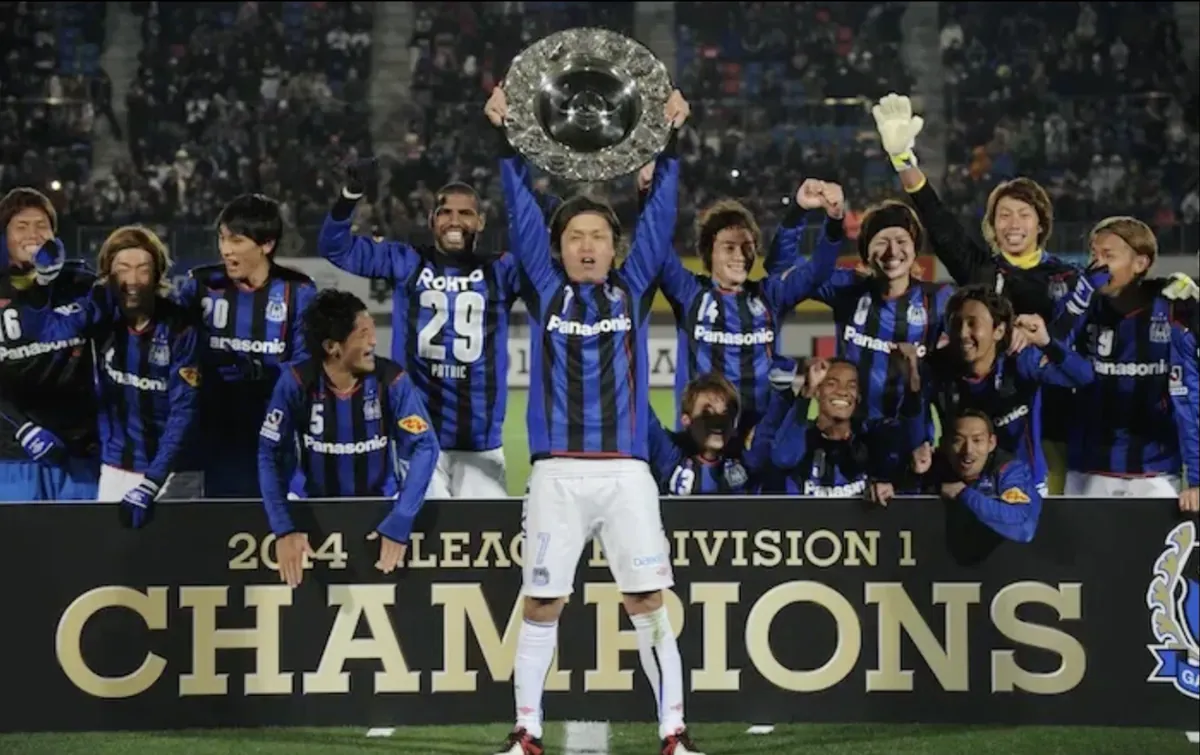
Back in J1 in 2014, Gamba won the Nabisco Cup, the J1 League and the Emperor's Cup. Taking all three domestic trophies in the first season after promotion was remarkable. Yasuhito Endo was the J.League MVP that year.
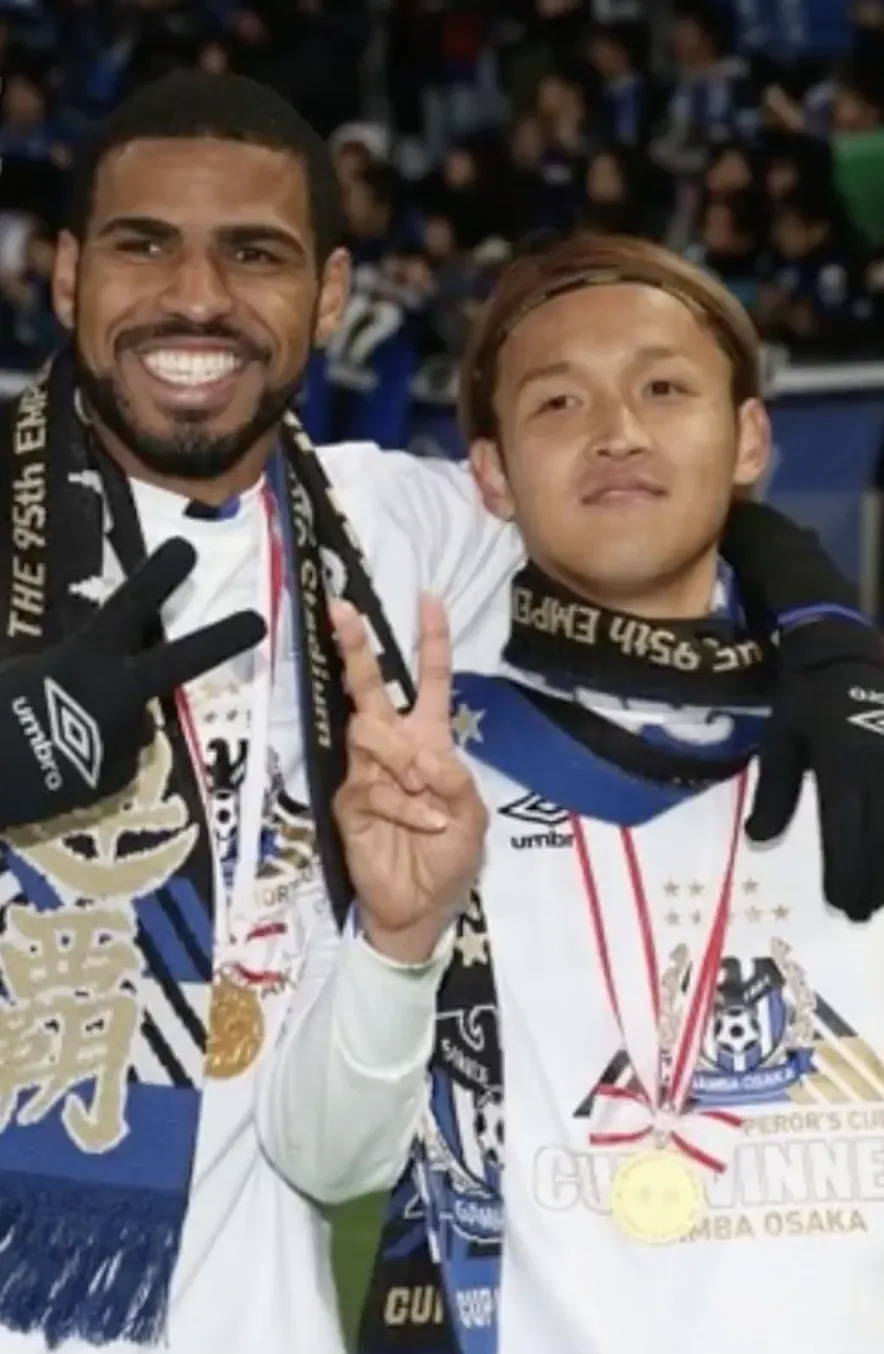
Gamba also beat Urawa Red Diamonds in the Super Cup in February 2015, and beat Urawa again in the final of the 2015 Emperor's Cup to win it for a second year running.
From Expo '70 Stadium to Panasonic Stadium Suita
Expo '70 Commemorative Stadium had a running track, so fans sat far from the pitch, and there was almost no roof. In 2009 the club announced a plan to build a football-only stadium in the same park, paid for by donations.
Capacity compared
How the ¥14.09 billion was raised
Sources: MEXT document prepared by Gamba Osaka; Suita City Football Stadium official site. Capacity: club official figure (the J.League lists 39,694) and Expo '70 Park official site.
| Date | Milestone |
|---|---|
| July 2009 | Stadium plan announced |
| March 2010 | Fundraising organisation founded |
| December 2013 | Construction starts |
| 30 September 2015 | Completed and donated to Suita City (the city owns it, Gamba runs it) |
| 14 February 2016 | First match: 3-1 win over Nagoya Grampus in front of 35,271 fans |
| 1 January 2018 | Naming rights: it becomes Panasonic Stadium Suita |
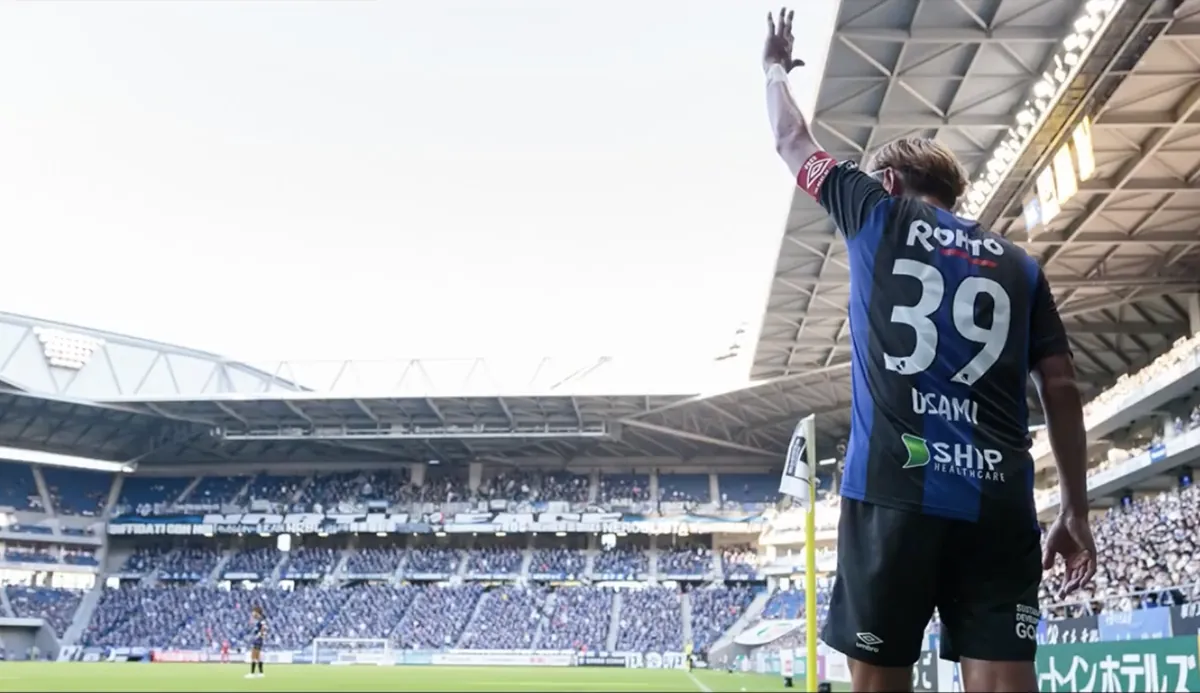
Built with money from 34,627 individuals, 721 companies and toto sports lottery grants, the stadium is a landmark that the people of Suita, the fans and local business built together. It stands inside Expo '70 Commemorative Park, not far from the Tower of the Sun. On match days a river of blue and black flows through the park.
For getting there and tickets, see our Gamba Osaka page. For things to see nearby, see the Expo '70 Park guide.
2016 to today: the new stadium and a second Asian title
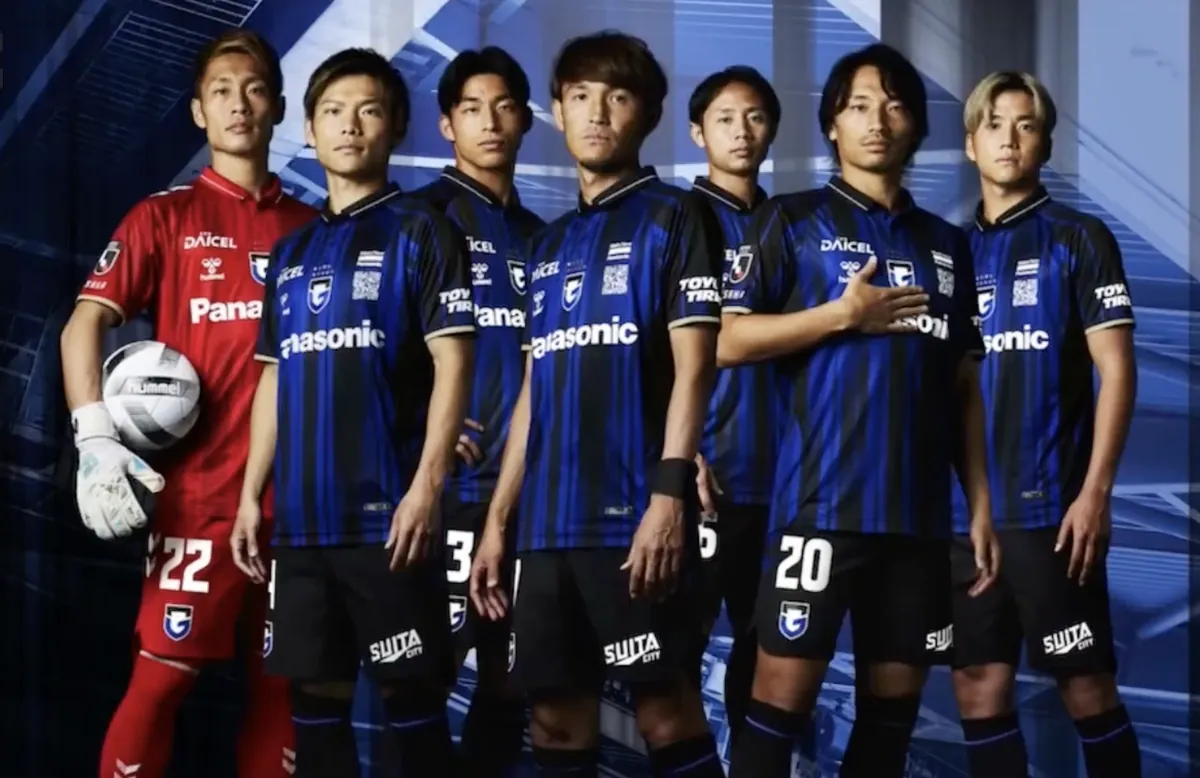
| Season | J1 position and highlights |
|---|---|
| 2020 | 2nd |
| 2021 | 13th |
| 2022 | 15th |
| 2023 | 16th |
| 2024 | 4th. Emperor's Cup runners-up (lost 0-1 to Vissel Kobe in the final) |
| 2025 | 9th |
| 2026 | 5th in the WEST group of the special J1 "Centennial Vision League". AFC Champions League Two winners (1-0 v Al-Nassr in the final, goal by Deniz Hümmet) |
Since July 2026 the manager has been Tomokazu Myojin, who played for Gamba from 2006 to 2015. The club's record appearance maker, Yasuhito Endo, works as head coach, the manager's No. 2 (as of September 2026).
List of honours
Trophy cabinet
The 1990 Emperor's Cup was won as Matsushita Electric. Sources: Gamba Osaka official club history; JFA list of Emperor's Cup winners.
Gamba also won the 2008 Pan-Pacific Championship (6-1 against Houston Dynamo in the final) and the 2013 J2 League, and finished third at the 2008 FIFA Club World Cup.
Club records: most appearances and goals
Most appearances (top 10)
Most goals (top 10)
League matches only (J1 + J2; cups and ACL not included). Source: J.League Digital Data Book, updated 20 September 2026.
Endo is also the oldest player to appear for the club: 40 years, 7 months and 26 days, against Nagoya on 23 September 2020. The foreign player with the most league goals is Patric (52).
suita.city all-time Gamba Osaka Best XI
suita.city all-time Best XI (4-4-2)
Not an official club selection. Gold: most appearances (Endo) and most goals (Usami).
| Pos. | Player | Why |
|---|---|---|
| GK | Masaaki Higashiguchi | 313 games; goalkeeper of the 2014 treble |
| DF | Akira Kaji | J.League Best XI 2006 |
| DF | Tsuneyasu Miyamoto | 295 games; former Japan captain, now president of the JFA |
| DF | Satoshi Yamaguchi | 320 games; J.League Best XI 2006 |
| DF | Hiroki Fujiharu | 313 games |
| MF | Hideo Hashimoto | 287 games; scored against Manchester United at the 2008 Club World Cup |
| MF | Yasuhito Endo | Club records of 605 games; 98 goals. J.League MVP 2014, ACL MVP 2008 |
| MF | Takahiro Futagawa | 430 games (2nd in club history) |
| MF | Shu Kurata | 429 games, 58 goals |
| FW | Takashi Usami | Club record 108 goals |
| FW | Patric | 52 goals, the most by a foreign player |
How we chose: we took the top 10 for appearances and goals in official J.League records, added J.League Best XI and MVP awards, and fitted the players into a 4-4-2.
Just missed out: Araújo (2005 MVP and top scorer), Patrick Mboma (1997 top scorer), Magno Alves (2006 Best XI), Masashi Oguro, Masanobu Matsunami, Junichi Inamoto, Tomokazu Myojin and Yasuyuki Konno. Who would be in yours?
Notable former players
| Player | Pos. | Years | In short |
|---|---|---|---|
| Sergei Aleinikov | MF | 1993–1996 | Former Soviet international; playmaker of the early years |
| Tsuneyasu Miyamoto | DF | 1995–2006 | Academy graduate; later head coach (2018–2021) and JFA president |
| Patrick Mboma | FW | 1997–1998 | 1997 top scorer (25 goals) |
| Junichi Inamoto | MF | 1997–2001 | Debut at 17, then moved to Arsenal |
| Masashi Oguro | FW | 1999–2005 | Key scorer in the 2005 J1 title |
| Takahiro Futagawa | MF | 1999–2016 | Academy graduate; 430 games |
| Yasuhito Endo | MF | 2001–2020 | Club appearance record; now head coach (No. 2 to the manager) |
| Araújo | FW | 2005 | 33 goals, top scorer and MVP |
| Akira Kaji | DF | 2006–2014 | J.League Best XI 2006 |
| Tomokazu Myojin | MF | 2006–2015 | Manager since July 2026 |
| Magno Alves | FW | 2006–2007 | J.League Best XI 2006 |
| Lucas Severino | FW | 2008–2010 | Member of the 2008 Asian champions |
| Yasuyuki Konno | DF/MF | 2012–2019 | Part of the 2014 treble team |
| Masaaki Higashiguchi | GK | 2014– | 313 games |
| Patric | FW | 2014–2017, 2019–2022 | 52 league goals |
| Takashi Usami | FW | Academy; debut 2009 | Club record 108 goals; also played in Germany |
FAQ
What does "Gamba" mean?
"Gamba" is Italian for "leg", the starting point of football. The name also sounds like the Japanese word ganbaru, "to give your best" (club and J.League official sites).
When was Gamba Osaka founded?
Its forerunner, the Matsushita Electric soccer club, was founded in 1980. It became a J.League member in 1991, played in the first J.League season in 1993 and took the name Gamba Osaka in 1996.
How many times has Gamba Osaka won the J1 League?
Twice, in 2005 and 2014. In 2014 it also won the J.League Cup and the Emperor's Cup for a domestic treble.
When did Gamba Osaka win in Asia?
It won the 2008 AFC Champions League (5-0 on aggregate against Adelaide United in the final) and the 2025/26 AFC Champions League Two (1-0 against Al-Nassr in the May 2026 final).
How did Gamba do at the FIFA Club World Cup?
It finished third in 2008. It lost 3-5 to Manchester United in the semi-final and beat Pachuca of Mexico 1-0 in the third-place match.
What is the capacity of Panasonic Stadium Suita?
About 40,000 according to the club (the J.League lists 39,694). It is a football-only stadium with a roof over the stands.
How was Panasonic Stadium Suita paid for?
Donations from 34,627 individuals and 721 companies, plus grants such as the toto sports lottery, covered the total cost of about ¥14.09 billion. It was finished on 30 September 2015, donated to Suita City, and has been Gamba's home since 2016.
Where did Gamba play before?
From 1993 to 2015 its home was Expo '70 Commemorative Stadium (21,000 seats), an athletics stadium in the same Expo '70 Commemorative Park.
Who has the most appearances and goals for Gamba?
In official J.League records (J1 and J2 league games), Yasuhito Endo has the most appearances (605) and Takashi Usami the most goals (108).
What is Gamba Osaka's all-time Best XI?
There is no official one. From official records and awards, suita.city chose Higashiguchi, Kaji, Miyamoto, Yamaguchi, Fujiharu, Hashimoto, Endo, Futagawa, Kurata, Usami and Patric in a 4-4-2.
Who is Gamba Osaka's manager now?
Tomokazu Myojin, appointed in July 2026 (as of September 2026). He is a former Japan international midfielder who played for Gamba from 2006 to 2015.