
Where the name 'Suita' began
Shrine tradition calls it the clan shrine of the Suita-no-muraji family, who founded the village of 'Sukita' — the old form of Suita — and says it already existed as the 'Great Shrine of Suita' in 735.
SUITA SHRINES · TAKAHAMA SHRINE
The old guardian shrine of Suita, linked by tradition to the founding of the city's name — with Edo-period halls and a living danjiri float culture.
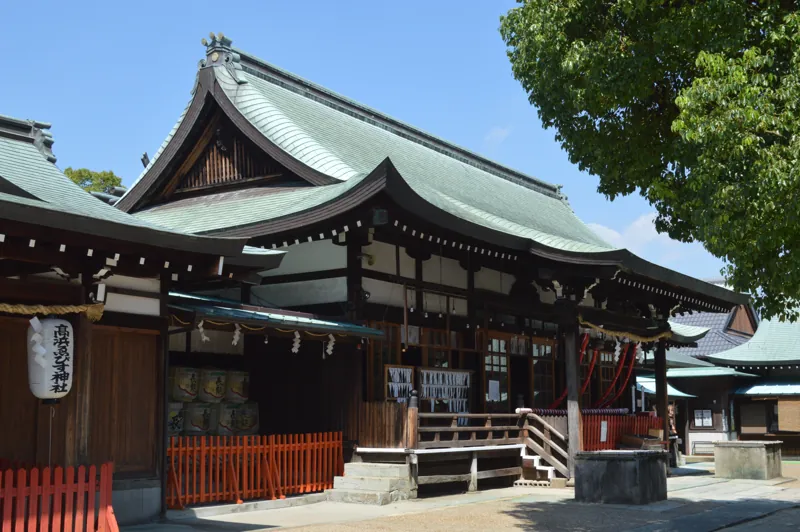
The approach and worship hall · Photo 2023 · Holy Sugar (CC BY-SA 4.0)
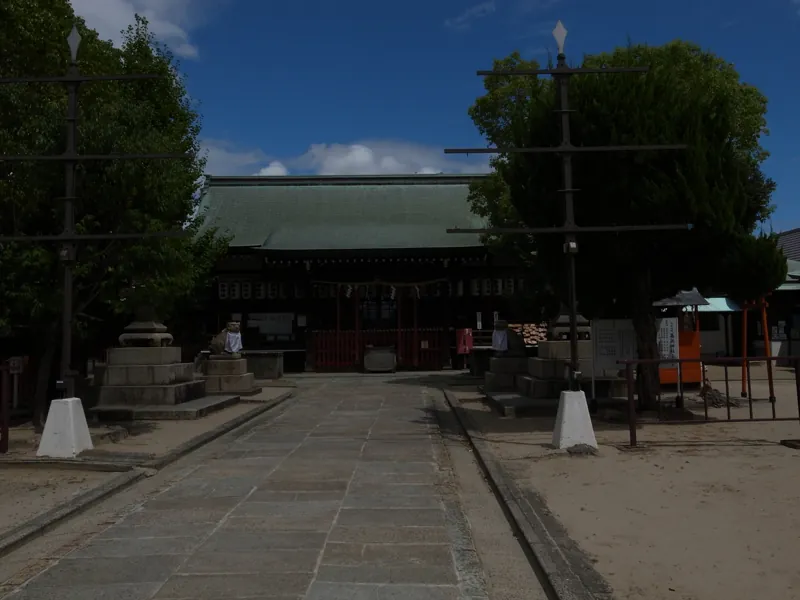
Takahama Shrine is in Takahama-cho, Suita, Osaka, about 550 m (straight line) from JR Suita Station. Shrine tradition ties it to the Suita-no-muraji clan who gave Suita its name and cites a record of 735. Its halls were rebuilt in 1693, and it is closely linked with the Suita Danjiri Festival each late July.
01 — HIGHLIGHTS
The guardian shrine of old Suita, keeper of the city's name story and its danjiri culture.
Shrine tradition calls it the clan shrine of the Suita-no-muraji family, who founded the village of 'Sukita' — the old form of Suita — and says it already existed as the 'Great Shrine of Suita' in 735.
The main, offering and worship halls were rebuilt in 1693 after a fire (date per shrine records) — Edo-period shrine architecture right in town.
Suita's seven Edo-period danjiri floats are city-designated folk cultural properties; several are linked with this shrine and parade near JR Suita Station in the Suita Danjiri Festival each late July.
The rabbit statues are loved as 'lucky rabbits' for matchmaking, and the Ebisu festival at the Fukujinja sub-shrine draws crowds in January.
02 — HISTORY
Tradition (legend), written records and expert estimates are labelled separately.
Tradition says the Suita-no-muraji clan crossed the Yodo River, opened the village and enshrined their ancestors.
Shrine records cite a document of 735 naming it the Great Shrine of Suita.
A procession carrying Susanoo from Harima toward Kyoto is said to have halted by the river; the deity was later enshrined here.
Retired Emperor Go-Saga is recorded as worshipping here when visiting the Fujiwara villa 'Suita-dono'.
After war damage, the shrine was restored by the bannerman Takenaka Shigesada and the Hashimoto family.
The halls were rebuilt after a fire (shrine records).
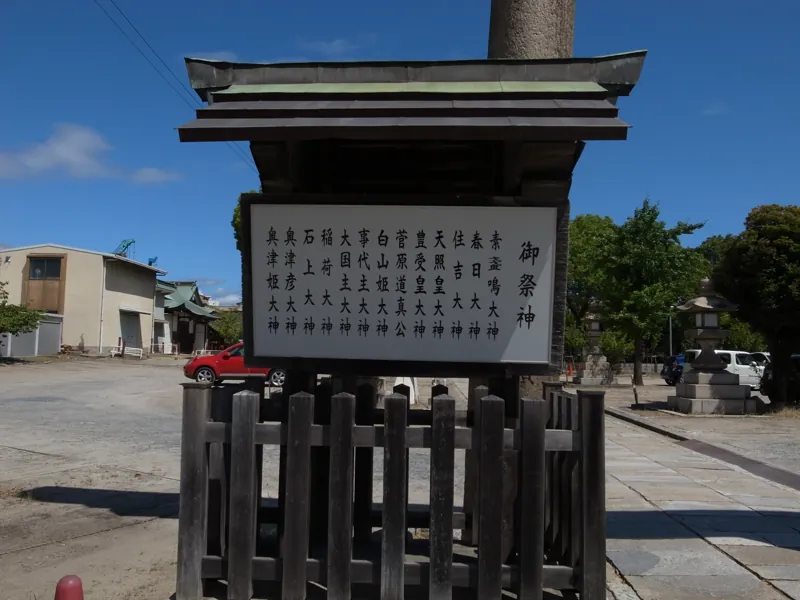
Kasuga, Hakusan and other local shrines were merged into it.
Suita's seven danjiri became city-designated folk cultural properties.
03 — FESTIVALS
| Toka Ebisu | Jan 9–11 |
|---|---|
| Spring festival | May 4–5 |
| Summer purification (chinowa) | Jun 30 |
| Suita Danjiri Festival | Late July (near JR Suita Station) |
| Summer festival (children's mikoshi) | Early August |
| Autumn rite (yudate) | Oct 5 |
Dates follow the shrine's published calendar. Check each year's notice for times and details.
04 — HOW TO VISIT
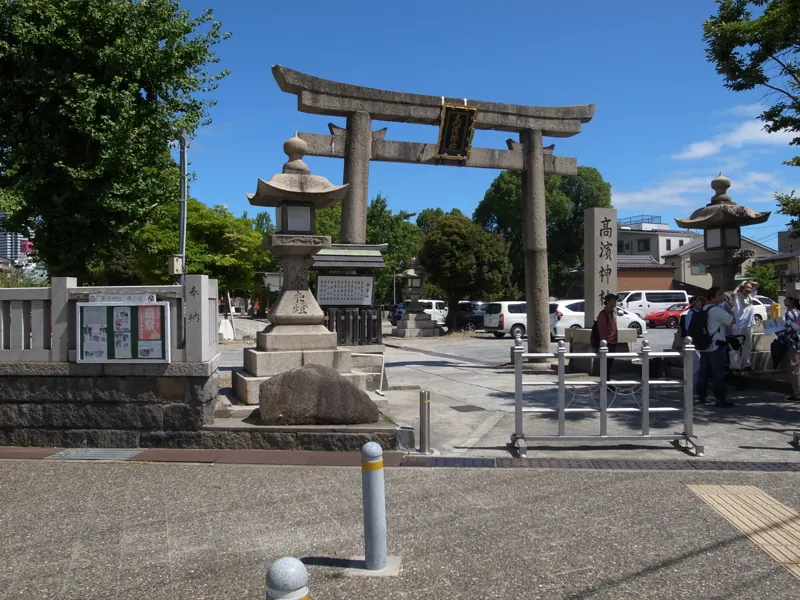
The torii gate marks the sacred area. Give a small bow before passing through, and walk to one side of the path rather than down the middle.
If there is a temizuya, rinse your left hand, then right, rinse your mouth with water poured into your left hand, then rinse the ladle handle.
Drop a coin in the offering box, ring the bell if there is one, bow deeply twice, clap twice, make your wish, then bow once more.
Photography in the grounds is generally fine; avoid shooting inside the halls or during ceremonies. The shrine sits in a residential area, so keep voices low.
05 — ACCESS
| Address | 5-34 Takahama-cho, Suita |
|---|---|
| Phone | 06-6381-0494 |
| Official site | takahamajinjya.kir.jp ↗ |
The shrine publishes no transport guide; distances are straight-line on the map. Check the walking route on the 3D map.
06 — PHOTOS
Free-licensed photos from Wikimedia Commons, shown with the year taken. Older photos may differ from today.
FAQ
JR Suita Station on the JR Kyoto Line, about 550 m in a straight line. The shrine does not publish a walking time, so check the route on the 3D map.
It is held around JR Suita Station each late July, with floats from neighbourhoods linked to Takahama Shrine. Check the official announcement each year for dates.
Rabbit statues in the grounds, loved as 'fuku-usagi' charms for matchmaking.
Written independently from the shrine's official site, Suita City and the Osaka Jinja-cho.
Checked: 2026-10-25