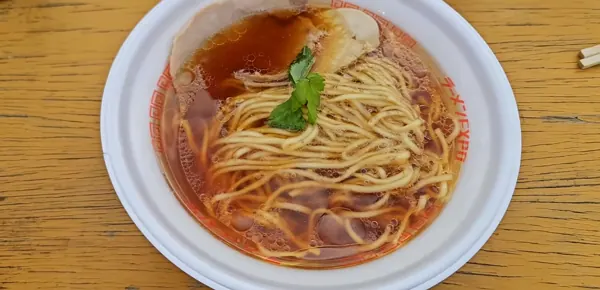
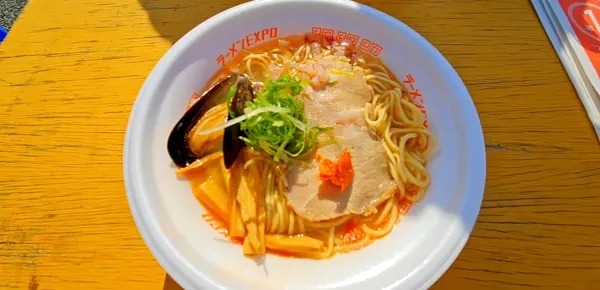
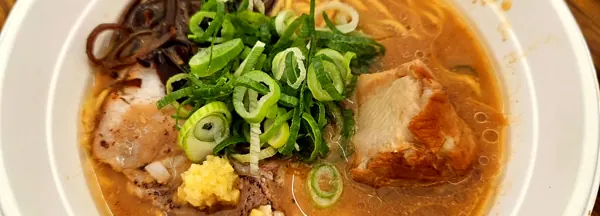
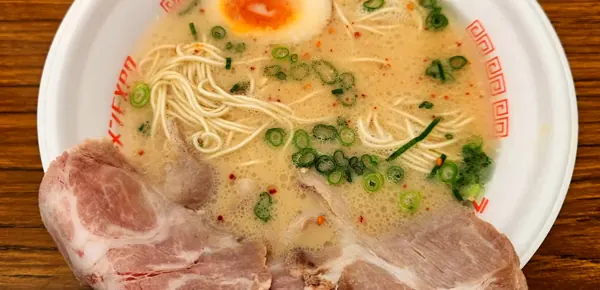
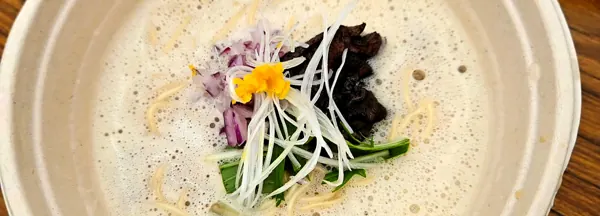
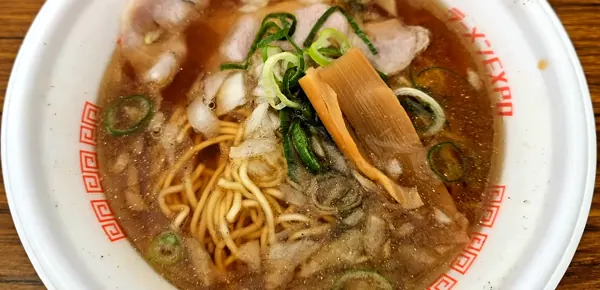
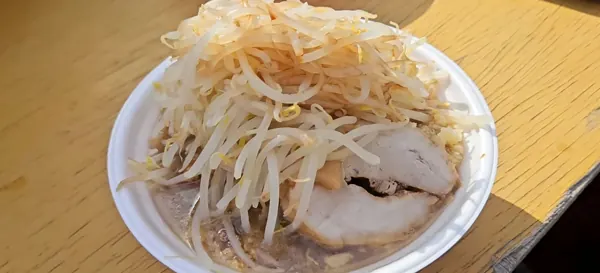
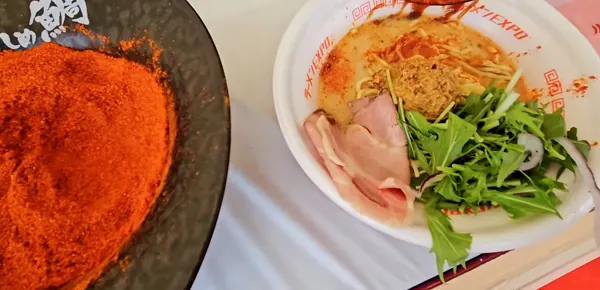
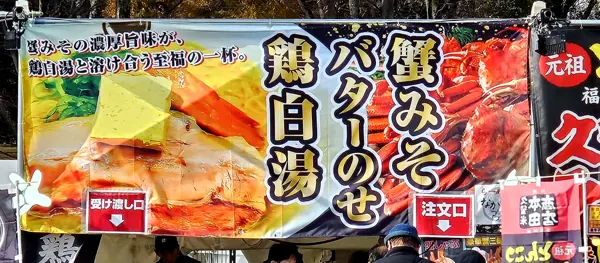
A bowl of Japanese ramen is described by three things: the broth (shoyu, shio, miso, tonkotsu, tori-paitan and so on), the thickness of the noodles, and the toppings. The broth is the word written largest on the banner, and it decides most of the flavour. You pay before you eat — from a ticket machine in a shop, or at the ticket booth at an event like Ramen EXPO, then hand the ticket to the stall.
This is the word written largest on a stall's banner. It decides most of what the bowl will taste like.
This is the word written largest on a stall's banner. It decides most of what the bowl will taste like.
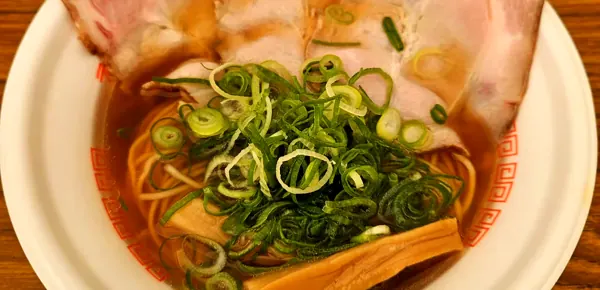
醤油shōyuSoy-sauce base. Clear brown soup — the oldest style of ramen in Japan.
Varies — ask the shop
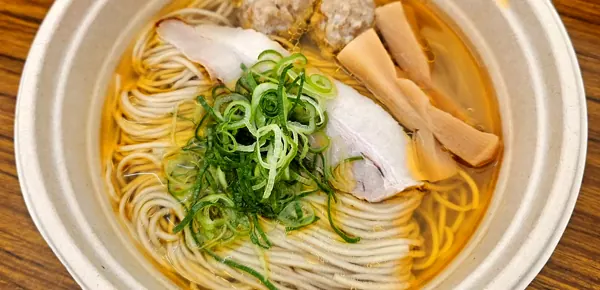
塩shioSalt base. The palest soup, so you taste the chicken or seafood stock itself.
Varies — ask the shop
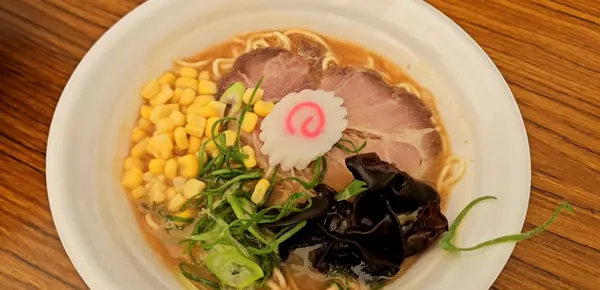
味噌misoMiso base. Born in Hokkaido — thick, slightly sweet, and popular in winter.
Usually contains pork
豚骨tonkotsuPork bones simmered for hours into a thick white soup. Fukuoka and Kyushu are its home.
Contains pork
鶏白湯tori-paitanChicken simmered into a creamy white soup — lighter than tonkotsu.
Varies — ask the shop
煮干しniboshiStock from dried sardines — a strong, slightly bitter fish flavour.
Varies — ask the shop
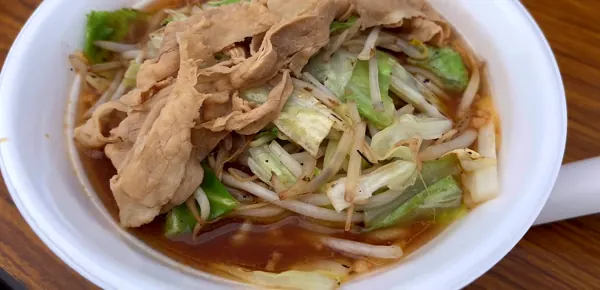
二郎系jirō-keiA mountain of bean sprouts and pork back-fat. Portions are very large.
Contains pork
担々麺tantanmenSpicy sesame-and-chilli-oil soup — the Japanese take on Sichuan dan dan noodles.
Usually contains pork
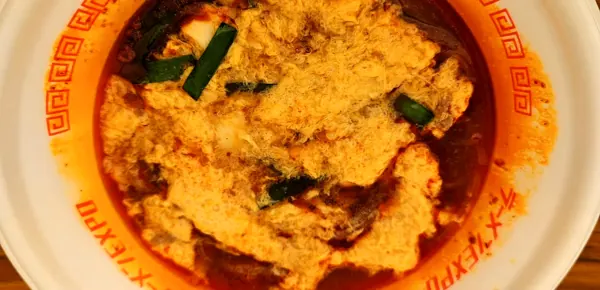
辛麺karamenMiyazaki's spicy ramen — finished with beaten egg, often with konjac noodles.
Varies — ask the shop
魚介・蟹gyokai / kaniShellfish, crab or prawn stock. Look for 蟹 (crab), 貝 (clam) or 海老 (prawn) on the banner.
Varies — ask the shop
牛骨gyūkotsuBeef-bone soup. Uncommon in ramen.
Varies — ask the shop
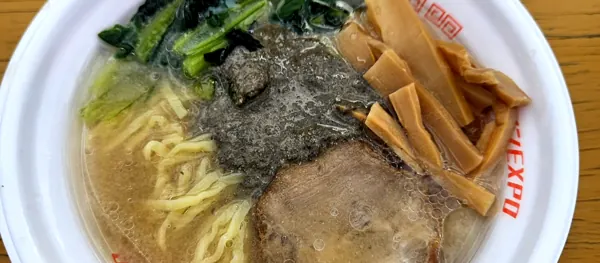
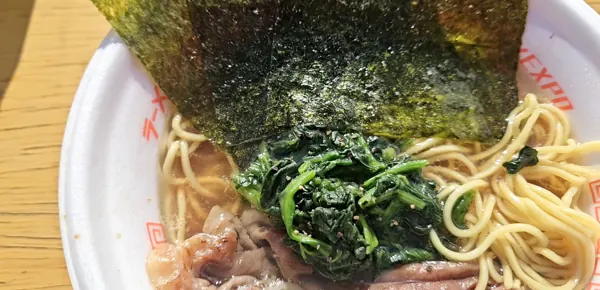
家系iekeiYokohama style: tonkotsu plus soy sauce, topped with nori and spinach.
Contains pork
Reading the line-up board
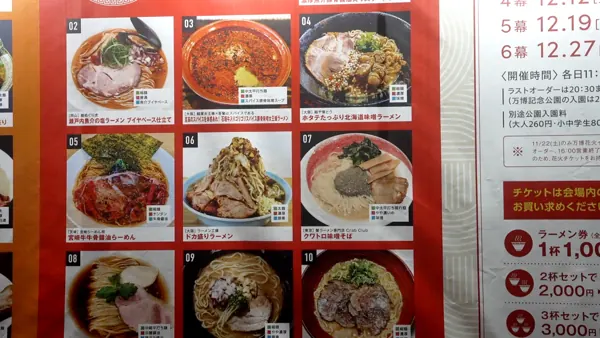
The line-up board at Ramen EXPO shows, for every shop, the noodle thickness, the richness of the soup and the type of broth as icons. You can choose from those three even without reading Japanese.
The line-up board at the venue: shop name and home region on the left, icons for noodles / richness / broth on the right
Noodles and how they are served
Usually shown in the small table or the icons on the banner.
Usually shown in the small table or the icons on the banner.
細麺hosomenThin noodles, usually paired with tonkotsu soup.太麺futomenThick noodles, common with miso and Jiro-style bowls.ちぢれ麺chijiremenWavy noodles that hold the soup well — typical of Sapporo miso.平打ち麺hirauchi-menFlat noodles with a chewy texture.つけ麺tsukemenNoodles and soup come separately — you dip the noodles. The soup is stronger.まぜそばmazesobaNo soup — mix everything together before eating.替玉kaedamaA second portion of noodles, ordered while you still have soup left. Common at tonkotsu shops, ¥100–200.麺の固さmen no katasaHow firm the noodles are: barikata (very firm), kata, futsū (normal), yawarakame (soft).大盛ōmoriA larger portion of noodles — free at some shops, extra at others.
Toppings
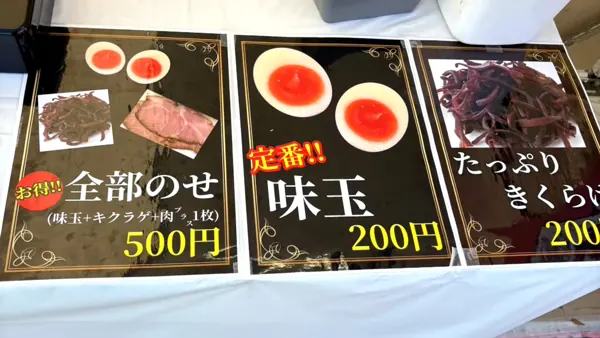
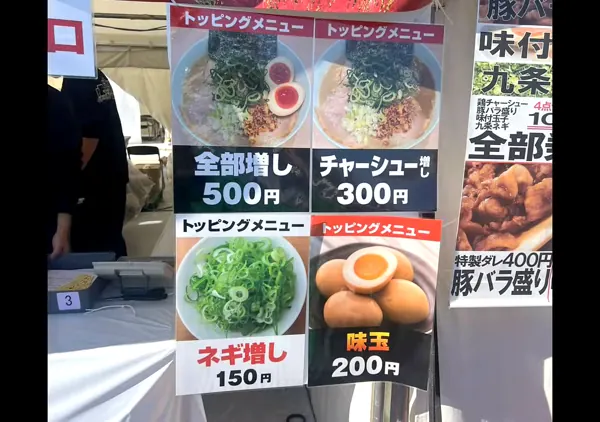
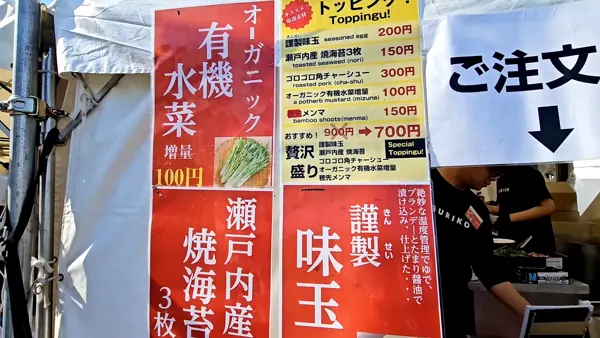
At Ramen EXPO each stall has a topping board beside it. Extras are normally paid in cash.
At Ramen EXPO each stall has a topping board beside it. Extras are normally paid in cash.
チャーシューchāshūBraised or seared meat, normally pork belly or shoulder. Some shops use chicken.
Usually contains pork
味玉ajitamaSoft-boiled egg marinated in soy sauce. Around ¥200 at the EXPO.
No pork
メンマmenmaFermented bamboo shoots with a crunchy texture.
No pork
海苔noriToasted seaweed. Dip it in the soup and wrap noodles in it.
No pork
ナルトnarutoFish cake with a pink spiral.
No pork
もやしmoyashiBean sprouts — piled into a mountain in Jiro-style bowls.
No pork
コーン/バターkōn / batāThe classic pairing on Hokkaido miso ramen.
No pork
きくらげkikurageCrunchy black wood-ear mushroom, common with tonkotsu.
No pork
全部のせzenbu-noseAll the toppings at once — usually around ¥500 at the EXPO.
Usually contains pork
Ordering and eating
In Japan you pay before you eat. Ramen EXPO works the same way.
In Japan you pay before you eat. Ramen EXPO works the same way.
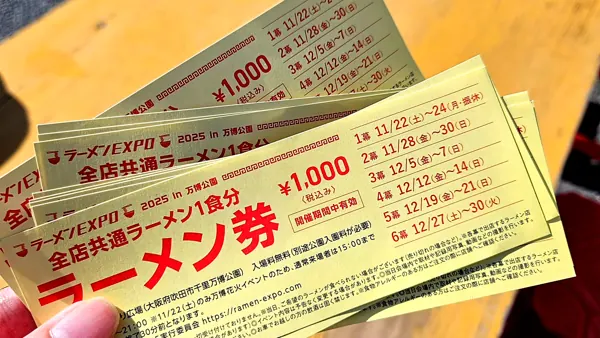
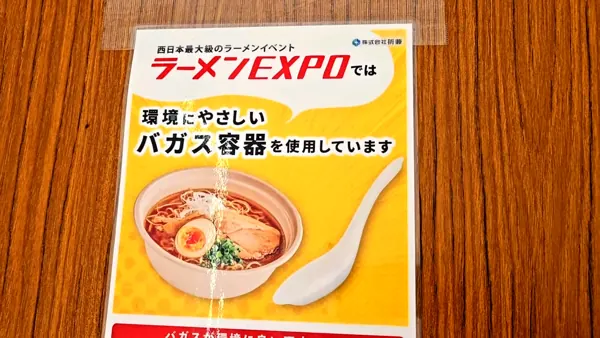
食券・券売機shokken / kenbaikiBuy a meal ticket from the machine first, then hand it over. At the EXPO this is the ticket booth by the entrance.注文口chūmon-guchiThe window where you hand over your ticket — marked with a red sign at the stalls.受渡し口uketoshi-guchiThe pick-up window. Often a different window from where you ordered.現金のみgenkin nomiCash only. Extra toppings at the EXPO usually are. Keep ¥1,000 notes handy.券売機のボタンOften Japanese only. The top-left button is usually the shop's signature bowl.麺をすする音Slurping your noodles is not rude in Japan.スープを飲むDrink it with the spoon, or lift the bowl — both are normal.返却henkyakuReturn your tray yourself when you finish. EXPO bowls are made of sugar-cane fibre and go in the sorted bins.
FAQ
Does ramen always contain pork?
Very often. Even when the broth is not tonkotsu, the chashu topping is usually pork and the finishing oil may be pork fat. If you avoid pork, see finding ramen without pork.
Is it rude to slurp?
No. Slurping noodles is normal and not considered rude in Japan.
Can I drink the soup straight from the bowl?
Yes. Use the spoon or lift the bowl — both are normal. Finishing the soup is a compliment, but nobody minds if you don't.
What is kaedama?
A second portion of noodles, ordered while you still have soup left. It is common at tonkotsu shops and costs about ¥100–200. It is not offered at every stall.
The ticket machine is only in Japanese. What do I press?
The top-left button is almost always the shop's signature bowl, and it is the safe choice. At Ramen EXPO there is no machine — you buy tickets at the booth by the entrance.
Last verified: 2026-09-16 Meanings and indicative prices were checked against the 2025 venue and the shops' own signs. Prices and offerings vary by shop.
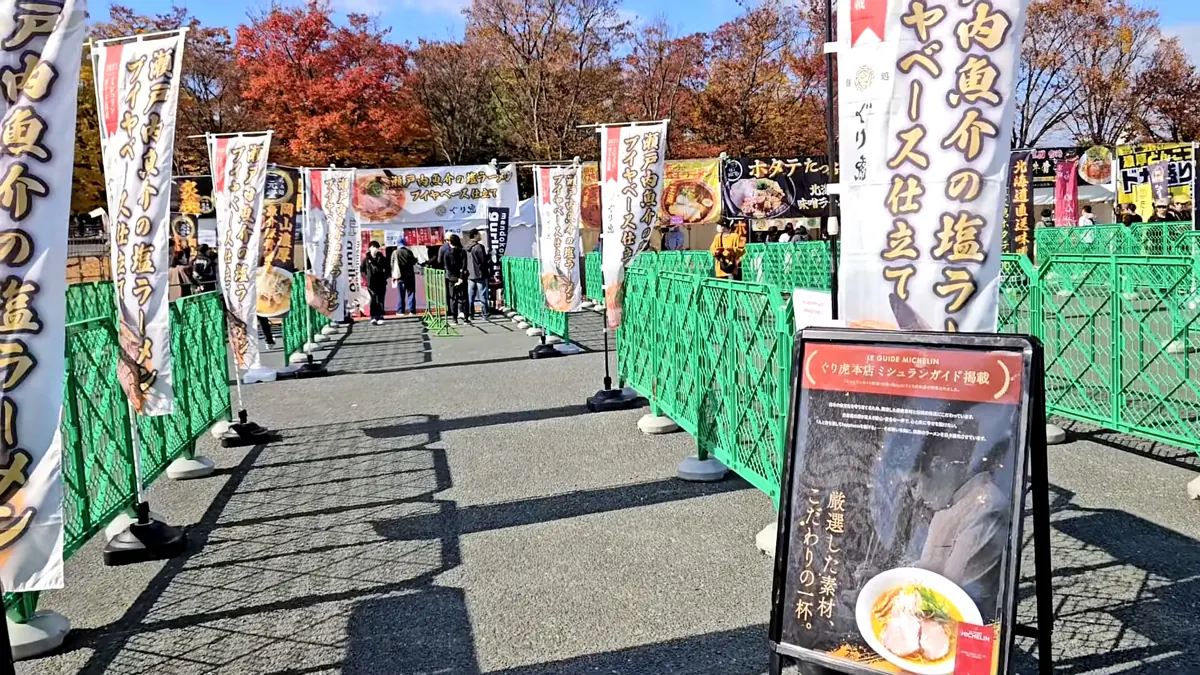
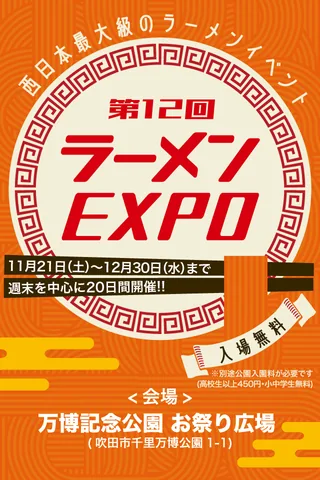 Ramen EXPO 2026 at Expo '70 ParkNov 21 – Dec 30 · 60 shops from all over Japan. Dates, tickets, access and 40 bowls from 2025 →