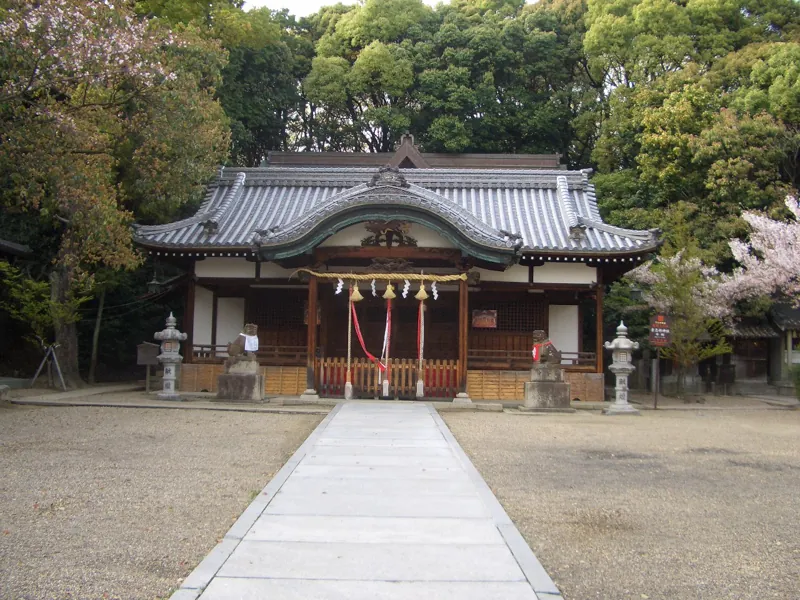
The halls before the 2008 fire (photo 2006) · Photo 2006 · 鉄虫 (CC BY-SA 3.0)
Kishibe Shrine stands in Shikinzan Park, Suita, about 20 minutes on foot from JR Kishibe Station. Its 1610 seven-bay main hall, a former National Important Cultural Property, burned in 2008 and was rebuilt in 2011; the new hall is not a designated property. The Donji rite on October 17 is a city intangible folk cultural property.
Deities
Amaterasu, Toyouke and six more — the 'eight guardian shrines'
Main hall
Rebuilt 2011; the 1610 original (once a National Important Cultural Property) burned in 2008
Nearest station
20 min on foot from JR Kishibe Station (official)
Heritage
Donji rite: city intangible folk property / Kishibe kilns: national historic site
01 — HIGHLIGHTS
Highlights
Kishibe's guardian shrine on the hill of Heian roof tiles — burned, rebuilt, and still keeping the ancient Donji rite.
01
A seven-bay sanctuary reborn
The sanctuary — the only seven-bay nagare-zukuri in Osaka Prefecture — burned in 2008. Using surveys of the ruins, it was rebuilt in 2011 in its original form and Momoyama-style colors. The new hall is not a designated cultural property.
02
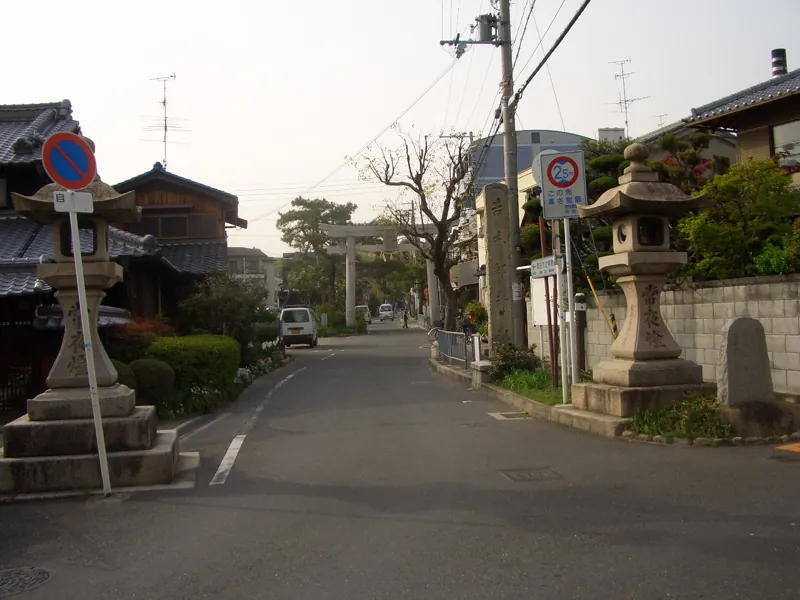
The straight 'Baba' approach
A pine-lined path running straight north for about 300 m from the old Kameoka Road, said to follow the ancient land-grid orientation.
03
The hill of Heian roof tiles
The same Shikinzan hill holds the Kishibe kiln site (national historic site), which fired roof tiles for the new capital Heian-kyo in 794 — the hill's history, separate from the shrine's.
04
Autumn chrysanthemums
From late October to around November 22, chrysanthemums grown by a local club fill the grounds (roughly 7:00–17:00).
02 — HISTORY
History: legend and record, side by side
Tradition (legend), written records and expert estimates are labelled separately.
The 'Great Shrine' begins Tradition
Tradition says the deity was brought from Mizugaki in Yamato (not recorded in the national chronicles).
Rebuilt after war Record
Burned in the Onin War, the shrine was rebuilt around the surviving sacred mirror.
A seven-bay sanctuary Record
The sanctuary was built with support from the Kishibe brothers (ridge tag).
Eight deities Record
Toyouke was added, making the 'eight guardian shrines'.
Renamed Kishibe Shrine Record
The name was fixed during the separation of Shinto and Buddhism.
Important Cultural Property Record
The old sanctuary was designated nationally.
Lost to fire Record
A suspicious fire destroyed the sanctuary and worship hall on May 23; the designation was lifted in September.
Rebirth Record
The halls were completed on May 22; in April the Donji rite became a city-designated folk property.
03 — FESTIVALS
Festivals & annual events
Tondo (burning old charms)
Jan 15, morning
Setsubun
Feb 3, 19:00
Spring festival (yu-kagura, stalls)
Apr 16
Eve festival
Oct 16
Main festival — Donji
Oct 17 (offerings from three districts)
Chrysanthemum show
Late Oct – around Nov 22
Dates follow the shrine's published calendar. Check each year's notice for times and details.
04 — HOW TO VISIT
How to pray at a Shinto shrine
1
Bow at the torii
The torii gate marks the sacred area. Give a small bow before passing through, and walk to one side of the path rather than down the middle.
2
Purify at the water basin
If there is a temizuya, rinse your left hand, then right, rinse your mouth with water poured into your left hand, then rinse the ladle handle.
3
Two bows, two claps, one bow
Drop a coin in the offering box, ring the bell if there is one, bow deeply twice, clap twice, make your wish, then bow once more.
4
Photos and quiet
Photography in the grounds is generally fine; avoid shooting inside the halls or during ceremonies. The shrine sits in a residential area, so keep voices low.
Or take a Hankyu bus from JR Suita Station to 'Shikinzan Koen-mae' (about one per hour). Parking is only for those receiving prayers and may be unavailable on festival days.
Free-licensed photos from Wikimedia Commons, shown with the year taken. Older photos may differ from today. Note: most Kishibe photos were taken in 2006, before the 2008 fire. Today's halls were rebuilt in 2011.
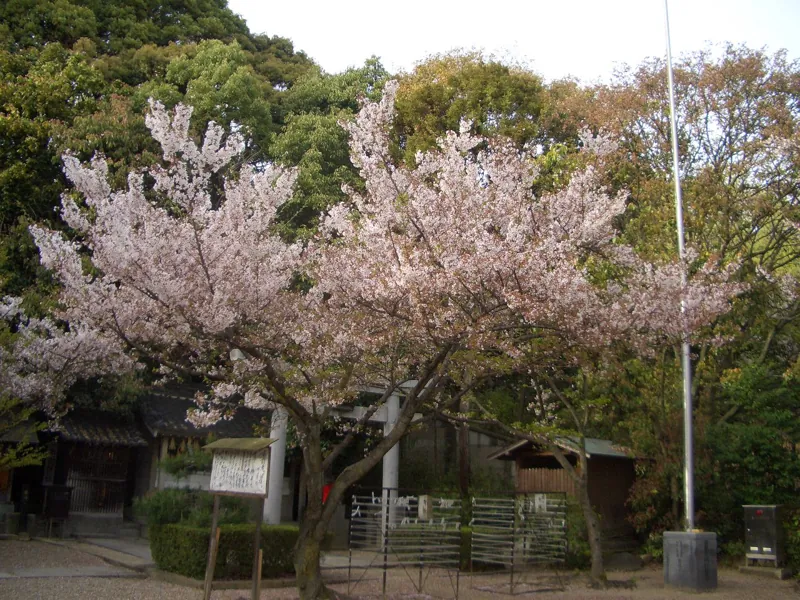
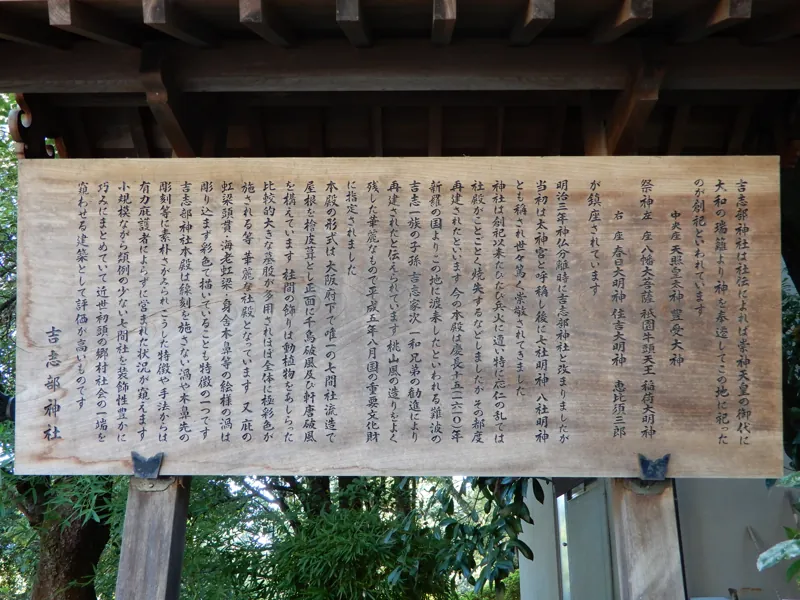
The halls before the 2008 fire (photo 2006)Photo 2006 · 鉄虫 · CC BY-SA 3.0The straight approach, the 'baba'Photo 2006 · 鉄虫 · CC BY-SA 3.0Cherry blossoms in the groundsPhoto 2006 · 鉄虫 · CC BY-SA 3.0The shrine history boardPhoto 2020 · AstraeaZero · CC BY-SA 4.0
FAQ
FAQ
Is the main hall an Important Cultural Property?
The 1610 hall was, but it burned in 2008 and the designation was lifted. The hall rebuilt in 2011 is not a designated cultural property.
When can I see the Donji rite?
At the main autumn festival on Oct 17, when offerings from three districts are carried into the shrine.
How do I get there?
About 20 min on foot from JR Kishibe Station (official), or take a Hankyu Bus from JR Suita Station to 'Shikinzan-koen-mae' (infrequent).
Sources
Written independently from the shrine's official site, Suita City and the Osaka Jinja-cho.